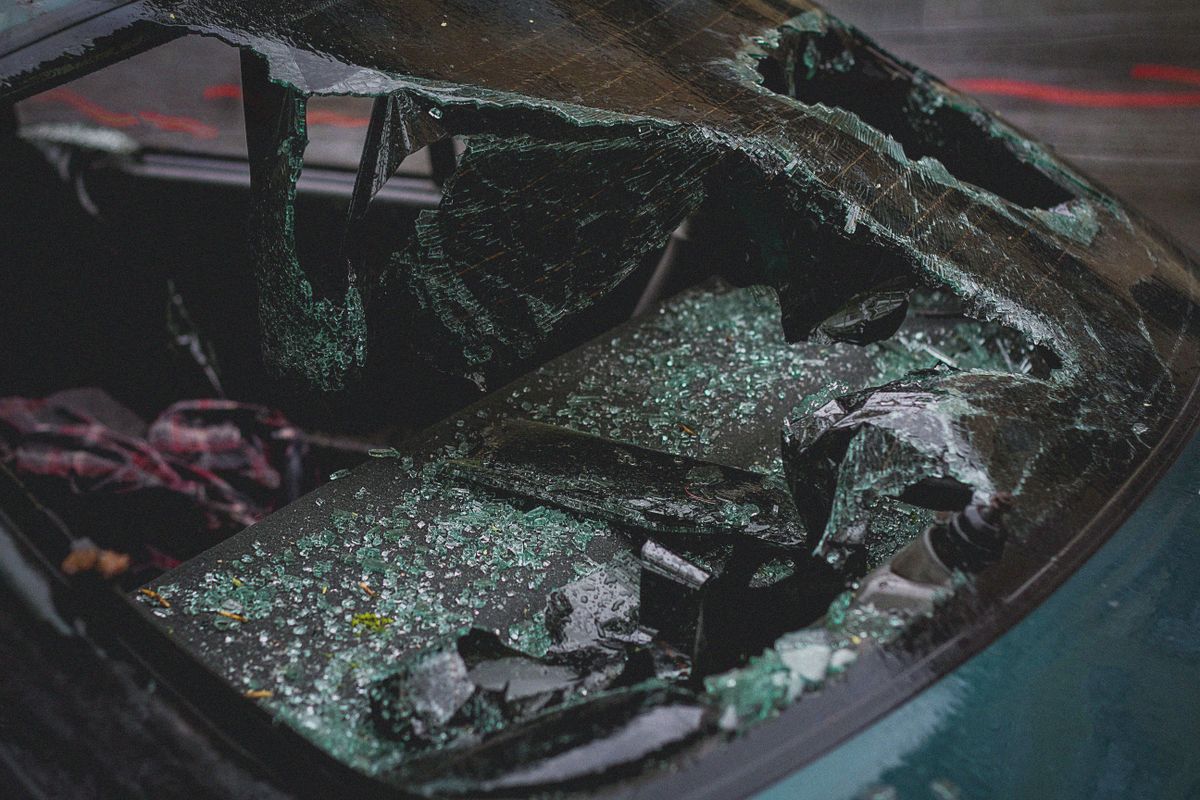
Your heart is racing, traffic is moving around you and the other driver may be upset. That is when a short, calm checklist helps most. For the hours and days that follow, see our After an Accident Guide.
If anyone is hurt, call 911 first. Everything else can wait. Do not move an injured person unless they are in immediate danger, such as from fire.
The at-the-scene checklist
- Stop safely. Pull over as close to the scene as you safely can. Drivers involved in a crash are required to stop, and leaving can bring criminal charges.
- Check for injuries. Yourself first, then your passengers, then everyone else involved.
- Make yourself visible. Hazard lights on, flares or reflective triangles out if you have them, and stay out of traffic lanes.
- Move the cars if it is safe and allowed. See the next section.
- Call the police. Use 911 for injuries or danger, or the local non-emergency number for a minor crash.
- Trade information. Names, phone numbers, insurance companies and policy numbers, license and plate numbers, and vehicle descriptions.
- Take photos. Every vehicle, the damage, license plates, the road, signs and signals.
- Find witnesses. Ask for names and phone numbers before they leave.
- Get the report number. Note the officer's name, badge number and agency.
- Call your insurer as soon as you reasonably can, using the claims number on your card or app.
Should you move the cars?
Many states have laws, sometimes called "move it" or "steer it, clear it" laws, that require or encourage drivers to move their vehicles out of travel lanes after a minor crash with no injuries. Cars stopped in a live lane can lead to a second crash, which is why these laws exist.
If the cars can be driven, take a few quick photos of where they came to rest if you can do so safely, then move to the shoulder, a parking lot or a quiet side street nearby. Leave the vehicles where they are if:
- Anyone is injured
- A car cannot be driven safely, or you see leaking fuel or smoke
- A police officer tells you not to move them
Rules differ by state, and your state's driver handbook explains what applies where you live.
What to say, and what to avoid
Being courteous is good. Accepting blame is something else. Fault is decided later by insurers, and sometimes by courts, based on the evidence and your state's laws, and what you say at the scene can become part of that record.
| Helpful to say | Better to avoid |
|---|---|
| "Is everyone okay?" | "It was all my fault" or "I didn't even see you" |
| "Let's exchange insurance information." | "Let's keep insurance out of it," before anyone knows the full cost |
| Plain facts for the officer: where you were headed and what you saw | Guesses about speeds, distances or causes you are not sure of |
| "I'd like to get checked out before I say how I feel." | "I'm fine, I'm not hurt," before any medical checkup |
| "Could I get your name and number as a witness?" | Details about your policy limits or coverage |
Always tell the police the truth; just stick to what you actually know. Do not sign any statement or agreement about fault or payment at the scene, and hold off on posting about the crash on social media until the claim is settled.
If the other driver leaves
A hit-and-run is frightening, but do not chase the other car. Instead:
- Write down everything you can: the plate number (even part of it), make, model, color, any damage and the direction the car went
- Call the police right away and file a report
- Ask witnesses what they saw, and tell the police about nearby businesses or homes that may have cameras
- Notify your insurer quickly. Many policies require a hit-and-run to be reported to the police promptly for uninsured motorist coverage to apply
Uninsured motorist bodily injury coverage often pays for injuries in a hit-and-run. Damage to your car may be covered by uninsured motorist property damage coverage, where your state and policy include it, or by collision coverage minus your deductible. Some policies add conditions of their own, so read yours or ask your insurer.
If you hit a parked car or other property and cannot find the owner, leave a note in a visible, secure spot with your name, contact information and a short explanation, and report it to the police as your state requires.
If the other driver has no insurance
Driving without insurance is illegal in most states, but it still happens. Collect the same information you would from any driver, including their address and the vehicle owner's name, and make sure the police report notes that the driver was uninsured. Then look at your own policy:
- Uninsured motorist (UM) coverage can pay for injuries to you and your passengers.
- Uninsured motorist property damage or collision coverage can pay to repair your car, depending on your state and policy.
- PIP or MedPay, if you carry it, pays medical costs regardless of fault.
If the other driver has insurance but not enough, underinsured motorist (UIM) coverage may cover the gap. Insurance Types Explained describes each of these coverages.
Keep a collision kit in the car
- Your insurance card (paper or digital) and registration
- Your insurer's claims phone number
- A pen and paper, or a notes app you can open quickly
- A phone charger and a flashlight
- Reflective triangles or flares
- A basic first-aid kit and emergency contact information
Once you are safely home, the next steps are reporting the accident and, if you need to, filing a claim.